
The Vintage Desk Tool That Taught Me to Appreciate Things Built to Last
Sometimes, an ordinary object can become fascinating once you finally understand what it was made for.
When I first came across this unusual vintage desk tool, I wasn’t sure what I was looking at. At first glance, it seemed like a simple household or office object. But once I understood its purpose, I couldn’t stop thinking about it.
It wasn’t flimsy, disposable, or cheaply made. It had weight, character, and a very deliberate design—the kind of qualities that are becoming harder to find in everyday objects.
A Tool Built for Everyday Use
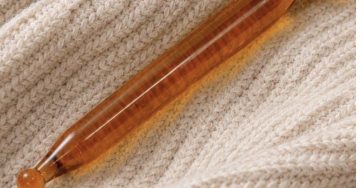
The warm golden-brown material immediately suggested something from another era.
It looked like the sort of object that might have been made from wood, Bakelite, or another durable early material commonly used for practical household and desk accessories.
Whatever its exact composition, one thing was obvious: it was designed to last.
There was no sense that this was something intended to be used briefly and thrown away. Its solid construction suggested years of regular use, perhaps sitting on someone’s desk or workspace and becoming part of their daily routine.
That kind of durability tells us something about how everyday products were once designed.
When Objects Were Made to Last
Modern life has made convenience incredibly easy.
We buy something, use it, replace it, and often forget about it.
Many inexpensive products are designed around convenience rather than longevity. If something breaks, replacing it can sometimes be easier than repairing it.
Vintage objects often tell a different story.
Their construction can feel heavier and more deliberate. Materials were selected not only for appearance but also for their ability to withstand years of handling.
That doesn’t mean everything from the past was necessarily better. But objects like this can remind us that durability, repairability, and craftsmanship were once important considerations in everyday design.
The Beauty of Bakelite and Vintage Materials
One reason vintage desk accessories can feel so distinctive is the materials used to make them.
Bakelite, for example, became popular during the early 20th century because it was durable, heat-resistant, and suitable for manufacturing everything from electrical components to household objects.
Its characteristic appearance can develop a warm, almost nostalgic quality over time.
Wood offers something different.
Every piece has its own grain, texture, and subtle variations. With years of handling, wooden objects can develop a patina that makes them feel even more personal.
These materials don’t simply perform a function.
They age.
And sometimes that aging becomes part of their appeal.
More Than Just a Desk Accessory
What fascinated me most wasn’t necessarily what the object did.
It was what the object represented.
Someone had designed it with a specific purpose. Someone manufactured it. Someone bought it. Someone used it repeatedly.
Eventually, it survived long enough to become an object that could still be discovered decades later.
That gives an otherwise ordinary tool a surprisingly human history.
We rarely think about the stories behind the objects sitting around us.
A desk accessory might have belonged to an office worker. A kitchen utensil might have been used by the same family for generations. A small wooden tool might have spent decades in a drawer before being rediscovered.
The object itself may be simple, but its journey can be anything but simple.
Why Vintage Objects Feel Different
There is also something psychological about holding an older object.
The weight immediately communicates something.
You can feel the material in your hand. You can see small marks left by years of use. You can sometimes imagine the people who handled it before you.
Modern objects can certainly be beautifully designed, but many are intentionally lightweight, inexpensive, and easy to replace.
Older tools often have a physical presence that makes them feel permanent.
That’s perhaps why discovering vintage objects can be so satisfying.
They remind us that usefulness and beauty don’t always require novelty.
A Lesson in Paying Attention
The discovery also changed the way I look at unfamiliar objects.
Before, I might have glanced at something unusual and moved on.
Now, I try to stop.
What material is it made from?
Why was it shaped that way?
What problem was it designed to solve?
When might it have been used?
Who might have owned it?
Those questions can turn an insignificant-looking object into a small historical mystery.
And sometimes the answer is surprisingly interesting.
What We Can Learn From Old Design
Vintage tools provide more than nostalgia.
They can also teach us about design, manufacturing, and everyday life.
A seemingly simple object can reveal what people valued at a particular time.
Perhaps they valued durability.
Perhaps repairs were expected.
Perhaps products were intended to remain in homes and offices for decades.
Perhaps designers focused more heavily on function than on constantly changing appearances.
Looking at these objects gives us an opportunity to compare those principles with modern consumer culture.
Why I Keep It on My Desk
I decided to keep the object rather than put it away.
It now sits on my desk where I can see it.
Every so often, I pick it up and feel its weight.
It’s a surprisingly simple reminder that not everything has to be temporary.
Not everything needs to be replaced simply because something newer exists.
Sometimes an old object has value precisely because it has survived.
The Hidden Stories in Ordinary Things
Perhaps that’s what makes vintage discoveries so compelling.
They encourage us to slow down.
An unfamiliar object can initially look meaningless, but closer inspection can reveal its purpose, its craftsmanship, and sometimes even a piece of history.
The same principle applies beyond antiques.
Old photographs, handwritten recipes, mechanical tools, kitchen utensils, books, and furniture can all tell stories if we take the time to notice them.
The challenge is simply paying attention.
Final Thoughts
What began as curiosity about an unfamiliar vintage desk tool became something more meaningful.
The object’s solid construction and timeless design reminded me of a period when everyday items were often expected to serve their owners for years rather than months.
It also taught me something about perception.
What we see at first isn’t always what something truly is.
Sometimes a closer look changes everything.
And sometimes the simplest object on a desk can quietly remind us that good design, thoughtful craftsmanship, and things built to last still have value.
Perhaps that’s the real charm of vintage objects.
They aren’t merely old.
They are survivors.